


6 Common Mistakes in Sound Wave Applications (And How to Avoid Them) – With the Original Mechow Schallwandler®
SEO Title: 6 Common Mistakes in Sound Wave Applications (And How to Avoid Them)
Meta Description: Discover the 6 most common mistakes when using sound wave applications and learn how the Original Mechow Schallwandler® can help you experience sound as true food for the senses.
Sound wave applications are becoming increasingly popular: whether in wellness facilities, spas, yoga studios, or private relaxation spaces. Yet many users don't fully benefit from this technology because they unknowingly make fundamental mistakes.
In this article, you'll learn which six errors occur most frequently: and how to avoid them. We'll focus specifically on the Original Mechow Schallwandler®, a patented device developed through decades of research by Rudolf Mechow in the 1980s and 1990s.
Why Sound Wave Applications Require Know-How
The idea sounds simple: play pleasant sounds, relax, feel good. But the reality is more nuanced. Sound wave applications aren't just about what you hear: they're about how you perceive sound physically. And this is precisely where things often go wrong.
The Original Mechow Schallwandler® works fundamentally differently than conventional speakers. Thanks to its patented cone technology (patent issued December 2016, DPMA IPC H04R 1/32), it converts 100% of direct sound into spherical waves with low sound pressure. When two transducers are used together, they create what's known as an "acoustic hologram": a three-dimensional sound perception that envelops you completely.
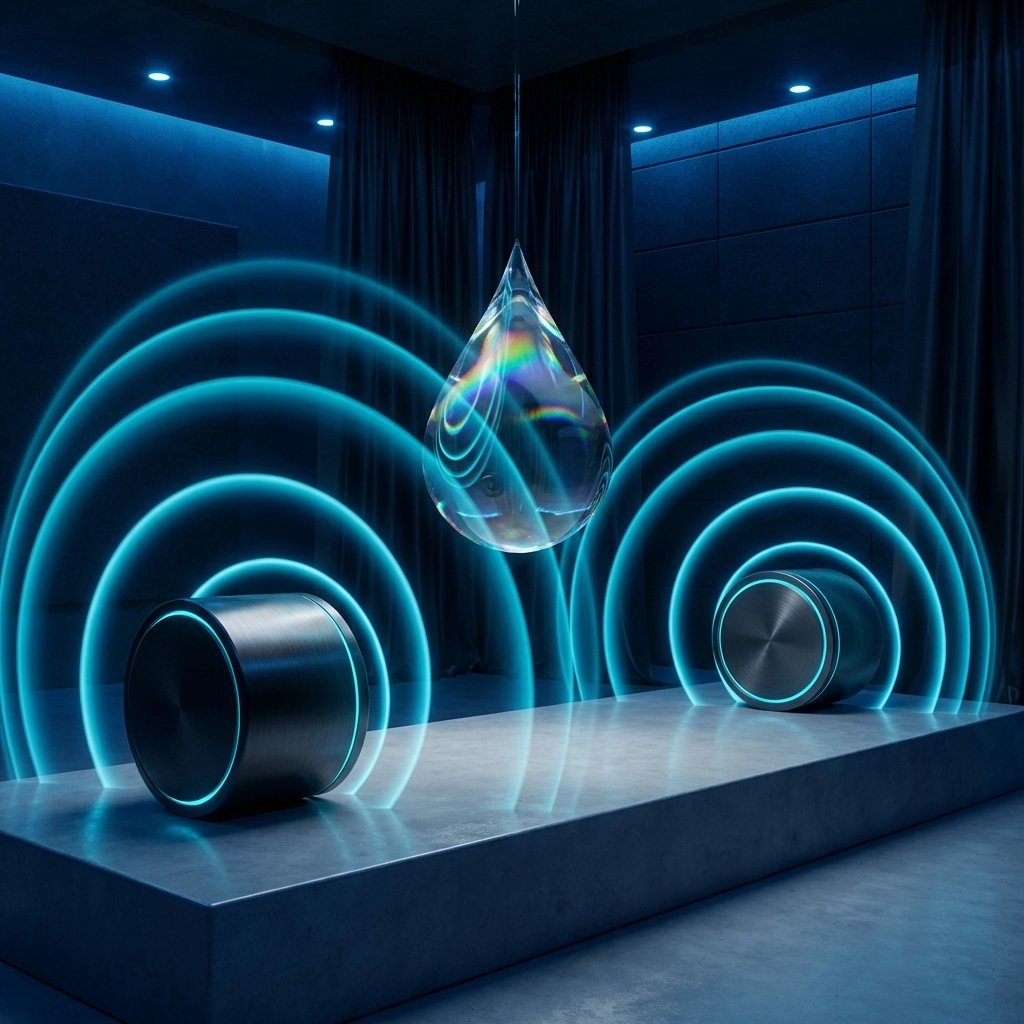
This technology offers remarkable possibilities: but only when applied correctly. Let's look at the six most common mistakes.
Mistake #1: Volume Too High
The most frequent error is also the most understandable: turning up the volume because "more is better." But sound wave applications follow different rules than your favorite playlist.
The problem: High sound pressure can lead to acoustic overstimulation. Instead of relaxation, you experience stress: often without even noticing it consciously. Your nervous system registers the excessive volume as a potential threat.
The solution: The Original Mechow Schallwandler® was specifically designed for low-sound-pressure emission. Work with this design philosophy, not against it. Start with barely perceptible volume and increase only until the sound gently fills the space. Many users report that the most profound experiences occur at surprisingly low volumes.
Rule of thumb: If you need to raise your voice to have a conversation, it's too loud.
Mistake #2: Expecting Miracles
Let's be direct: sound wave applications are not medical treatments. They don't cure diseases. They don't replace professional healthcare.
The problem: Some users approach frequency applications with unrealistic expectations: hoping for quick fixes to health issues. When these expectations aren't met, disappointment follows, and the genuine benefits get overlooked.
The solution: Understand what sound wave applications can offer: a space for relaxation, a break from noise clutter, an environment where many people perceive enhanced well-being. Users often describe the experience as supportive for their general sense of calm. That's valuable: but it's not medicine.
Think of it as food for the senses: nourishing, pleasant, and part of a balanced approach to well-being. Just as good food doesn't cure illness but supports overall health, quality sound can support your sense of balance without making therapeutic claims.

Mistake #3: Using Poor-Quality Audio Sources
You can have the finest sound technology in the world: but if you feed it compressed, low-quality audio files, you'll get disappointing results.
The problem: Many users connect their smartphones and play heavily compressed streaming audio (128 kbps or lower). The Original Mechow Schallwandler® reveals every detail in the sound source: including digital artifacts and compression losses.
The solution: Use high-quality audio sources whenever possible:
Lossless formats (FLAC, WAV, AIFF)
High-resolution streaming (if your service offers it)
Purpose-created frequency compositions designed for this type of application
The Schall Wellness library at wakanoa.info offers compositions specifically created for use with the Original Mechow Schallwandler®: from the grounding tones of EARTH to the flowing frequencies of WATER.
Mistake #4: Too Many Frequencies at Once
More isn't always better: especially with frequency applications.
The problem: Some users believe that layering multiple frequency tracks simultaneously will multiply the benefits. In reality, this often creates acoustic noise clutter: a confusing soundscape that the body can't process meaningfully.
The solution: Focus on one composition at a time. Allow your senses to fully engage with a single, coherent sound experience. The three-dimensional perception created by two Original Mechow Schallwandler® transducers (the "acoustic hologram" effect) works best with clean, intentionally designed audio.
Quality over quantity. Depth over breadth.

Mistake #5: Poor Positioning
Where you place your sound transducers matters enormously: yet it's often an afterthought.
The problem: Pushing the devices into corners, placing them behind furniture, or positioning them at random heights dramatically reduces their effectiveness. The spherical wave emission needs space to develop properly.
The solution: For the Original Mechow Schallwandler®, consider these positioning principles:
Ear level: Position the transducers approximately at the height of your ears when seated or lying down
Symmetrical placement: When using two units for the acoustic hologram effect, maintain equal distance to your listening position
Free space: Keep at least 50 cm distance from walls and large furniture
Stable surface: Vibrations from unstable placement can muddy the sound
Experiment with positioning. Small adjustments can make significant differences in how you perceive the three-dimensional sound field.
Mistake #6: Ignoring Your Body's Signals
Perhaps the most important mistake: and the one that underlies all others.
The problem: Users sometimes push through discomfort, continue sessions when feeling overwhelmed, or follow rigid schedules regardless of how they actually feel. They treat frequency application as a task to complete rather than an experience to engage with.
The solution: Your body communicates constantly. Learn to listen:
Feeling restless? Perhaps the session is too long, or the volume too high
Drifting into sleep? That might be exactly what you need: or a sign to try a more activating composition
Unusual sensations? Reduce intensity or take a break
There's no universal "correct" duration or frequency for sessions. Some people benefit from 15 minutes daily; others prefer 45 minutes twice weekly. Some respond more to the planetary frequencies in PLANETS; others find grounding in EARTH more suitable.
You are the expert on your own experience.

The Technology Behind the Experience
Understanding why the Original Mechow Schallwandler® works differently can help you use it more effectively.
Traditional speakers emit directional sound: waves that travel primarily forward. This creates "sweet spots" and dead zones in any room. The patented cone technology developed by Rudolf Mechow transforms this paradigm entirely.
The transducer converts 100% of the input into spherical waves radiating in all directions simultaneously. This means:
No sweet spot dependency: The experience remains consistent across the room
Low sound pressure: You can perceive the full frequency range without volume-related stress
Physical perception: Many users report feeling the sound throughout their body, not just hearing it with their ears
When two transducers work together, the overlapping spherical waves create interference patterns that the brain interprets as genuinely three-dimensional. This "acoustic hologram" isn't a marketing term: it's a perceptual phenomenon that many users describe as remarkably immersive.
Getting Started Right
If you're new to sound wave applications with the Original Mechow Schallwandler®, here's a simple framework:
Start simple: One transducer, low volume, high-quality audio
Create space: Comfortable seating or lying position, minimal distractions
Set modest expectations: Approach it as relaxation time, nothing more
Pay attention: Notice what you actually experience, without judgment
Adjust gradually: Longer sessions, second transducer, different compositions: but one change at a time
Avoid the six mistakes outlined above, and you'll give yourself the best possible foundation for meaningful experiences with this unique technology.
Conclusion: Sound as Food for the Senses
The Original Mechow Schallwandler® represents decades of acoustic research condensed into an elegantly simple device. But technology alone doesn't create experiences: how you use it matters.
By avoiding these six common mistakes: excessive volume, unrealistic expectations, poor audio sources, frequency overload, bad positioning, and ignoring your body: you allow the technology to do what it was designed to do: deliver sound as genuine food for the senses.
Not medicine. Not magic. Simply a refined way to experience acoustic vibration that many users perceive as deeply supportive for their well-being.
Explore the possibilities at wakanoa.info and discover compositions created specifically for this technology: from Namaste to Spiritual Dance and beyond.
Kommentare